



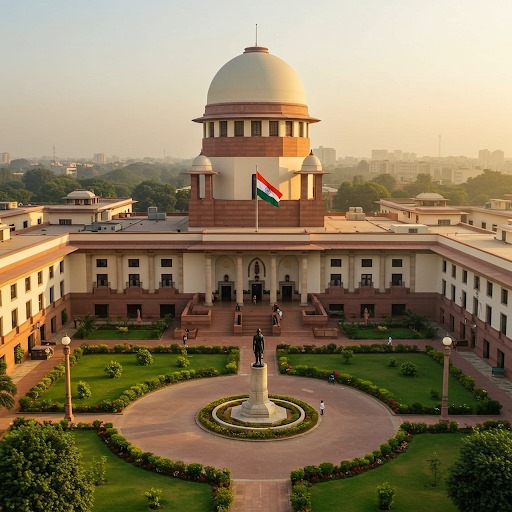
DATE: 24/11/1961
BENCH: Justice K. Subbarao, Justice S. K. Das, and Justice Raghubar Dayal
FACTS:
The appellant, Kawas Manekshaw Nanavati, was a naval officer married to Sylvia, with whom he had three children. Due to the nature of his profession, Nanavati frequently had to be away from Bombay, leaving his wife and children behind. During his absence, Sylvia developed a close friendship with Prem Ahuja, which eventually turned into an illicit relationship.
On April 18, 1959, upon returning from his ship, Nanavati noticed Sylvia's distant behavior when he tried to show affection. A similar incident occurred on April 27, prompting him to directly ask Sylvia if she had remained faithful during his absence. She admitted to her affair with Ahuja, leading Nanavati to confront Ahuja about his intentions.
After dropping his wife and children at a cinema, Nanavati proceeded to his ship, where he obtained a revolver and six rounds under false pretenses. He then drove to Ahuja’s office but, not finding him there, went to his residence. Upon confirming Ahuja’s presence through the servant, Nanavati entered his bedroom and shut the door. He questioned Ahuja about his intentions regarding Sylvia and their children, asking if he planned to marry her and take responsibility for them. Ahuja reportedly responded that he was not obligated to marry every woman he had relations with. Enraged by this remark, a scuffle ensued, during which Nanavati drew his revolver and fired at Ahuja, resulting in his death.
ISSUES:
The key issues in this case revolve around whether Nanavati shot Ahuja in a moment of grave and sudden provocation, acting in the heat of the moment, or if the act was a premeditated murder. Additionally, the case raises a legal question on whether a Special Leave Petition (SLP) can be entertained without first complying with the order issued under Article 142 of the Indian Constitution.
JUDGEMENT WITH REASONING:
The Supreme Court upheld Nanavati’s conviction for murder, rejecting his defence of sudden provocation and ruling the act as premeditated. The Bombay High Court had set aside the jury’s acquittal, and the Supreme Court affirmed this, sentencing him to life imprisonment. He was later pardoned, and the case led to the abolition of jury trials in India.
The Court reasoned that there was a significant time gap between Sylvia’s confession and the killing, which gave Nanavati time to regain self-control. His actions—dropping his family at a theater, obtaining a revolver under false pretenses, and then driving to Ahuja’s residence—indicated a deliberate plan rather than an impulsive reaction. The Court held that sudden provocation must be immediate, and since Nanavati had time to reflect before committing the act, he could not claim this defense under Exception 1 to Section 300 of the IPC.
Additionally, the Court emphasized that the jury's earlier acquittal was improper, as they had been influenced by emotions rather than legal principles. The Bombay High Court had rightly set aside the jury's verdict, as it failed to consider key legal aspects. The Supreme Court upheld this decision, reaffirming that Nanavati’s actions constituted murder under Section 302 IPC. This case also highlighted procedural issues in jury trials, ultimately leading to their abolition in India.
ANALYSIS:
The Supreme Court’s decision in K.M. Nanavati v. State of Maharashtra reinforced the principle that sudden provocation must be immediate and that a time lapse between the provocation and the act allows for premeditation. The Court ruled that Nanavati had sufficient time to regain his composure after Sylvia’s confession before confronting Ahuja. His deliberate actions—procuring a revolver from the naval armory under false pretenses and systematically searching for Ahuja—demonstrated a calculated plan rather than an impulsive reaction. Since the law requires that provocation be so sudden and overwhelming that it leaves no time for reasoning, Nanavati’s claim of acting in the heat of the moment was rejected. This established a crucial precedent in defining the threshold for invoking the defence of grave and sudden provocation under Exception 1 to Section 300 IPC.
Furthermore, the case underscored the flaws in the jury system, as the initial acquittal was influenced by public sentiment rather than legal principles. The Bombay High Court, in setting aside the jury’s verdict, reinstated the trial judge’s authority in determining questions of law, which was later upheld by the Supreme Court. The ruling reaffirmed the judiciary’s role in ensuring that verdicts are based on legal reasoning rather than emotional appeal. This case significantly contributed to the abolition of jury trials in India, as it exposed the risk of bias and the potential for miscarriages of justice in high-profile cases. Ultimately, the decision reinforced the objectivity of the legal process, ensuring that verdicts are grounded in evidence and legal interpretation rather than public opinion.
 info@adhwaitha.com