M/S. PARSVNATH FILM CITY LTD. V. CHANDIGARH ADMINISTRATION & OTHERS 2025 INSC 464:




DATE: 20/03/2025
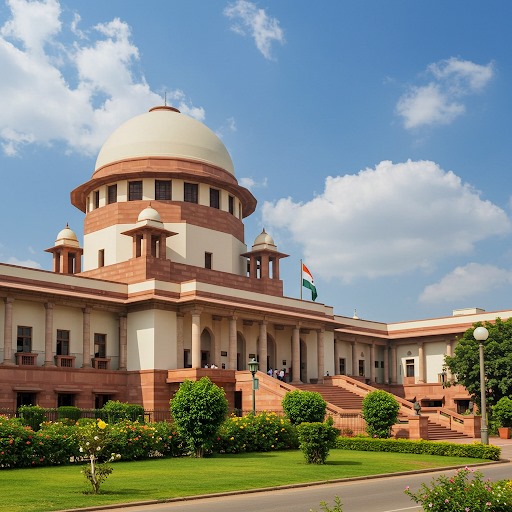
COURT: Supreme Court of India
BENCH: Justice B.V. Nagarathna and Justice Satish Chandra Sharma
FACTS:
The case concerned a dispute arising from a proposed project by the Respondents to establish a Multimedia-cum-Film City in Chandigarh. In furtherance of this objective, the Respondents issued a public advertisement inviting "Expressions of Interest" from prospective developers for undertaking the project on a 30-acre leasehold land as an integrated development. Out of fourteen companies that submitted proposals, six—including the Appellant—were shortlisted, and ultimately, four, including the Appellant, advanced to the final stage. Following this, the Appellant conveyed its willingness to sign the Development Agreement, but requested that the project site be properly demarcated first, emphasizing that such demarcation was necessary for commencing work. Eventually, both parties entered into the Development Agreement. During a subsequent High-Level Committee meeting, it was mutually agreed that the Administrative Department would prepare a revised proposal for rescheduling the payment obligations of the Appellant.
However, despite this consensus, the Respondents failed to take any further steps, and the agreed-upon rescheduling plan was not implemented. As a result, the Appellant declared that the agreement had been frustrated due to the Respondents’ inaction and sought the return of its earnest money deposit, along with interest. In response, the Respondents terminated the agreement, prompting the Appellant to invoke the arbitration clause in the agreement. When the Respondents refused to appoint an arbitrator, the Appellant approached the High Court. Later, the Respondents challenged the arbitral award before the Additional District Judge. The High Court, in its judgment, partially allowed the Respondents’ appeal and set aside the arbitral award to the extent that it upheld the Respondents’ action in forfeiting 25% of the bid amount—amounting to Rs.47.75 crores. Dissatisfied with this outcome, the Appellant brought the matter before the Supreme Court.
ISSUES:
The central issue in this case was whether the High Court was justified in setting aside the Arbitral Award dated 10.03.2012 under Section 34 of the Arbitration and Conciliation Act. The dispute revolved around the forfeiture of the appellant’s bid amount of Rs.47.75 crores and reimbursement of actual expenses incurred during the aborted Multimedia-cum-Film City project in Chandigarh. The case also raised questions about the appropriateness of the interest rate awarded by the Arbitral Tribunal and the entitlement of the appellant to compensation for alleged losses.
JUDGEMENT WITH REASONING:
The Supreme Court held that the High Court erred in setting aside the Arbitral Award dated 10.03.2012 and the order passed under Section 34 of the Arbitration and Conciliation Act. The Court restored the appellant’s entitlement to Rs.47.75 crores as the initial deposit and Rs.46,20,715 as actual expenses incurred. It modified the interest rate from 12% to 8% per annum but disallowed the compensation of Rs.47.75 lakhs for losses. The appeal was allowed, the arbitral award was partly modified, and the respondents were directed to pay the awarded amount by June 30, 2025.
The Court reasoned that the High Court had failed to consider the commercial nature of the project and the appellant's legitimate reliance on the terms of the Development Agreement. Since the project involved substantial investment and planning, the appellant had engaged multiple professional agencies in anticipation of timely project execution. The delay in project demarcation and inaction by the respondents caused the appellant to incur avoidable costs, forcing a reassessment of prior commitments. The Court found it unreasonable to expect the appellant to have raised these concerns prior to bidding, especially when delays were attributable to the respondents' failure to meet agreed timelines.
Furthermore, while affirming the return of the deposit and actual expenses, the Supreme Court found the 12% interest rate excessive and reduced it to 8%, balancing fairness and economic reality. However, since interest was being awarded on both principal and expenses, the Court disallowed the additional compensation of Rs.47.75 lakhs for notional loss, terming it unwarranted. It clarified that the respondents must fulfill the payment obligation by June 30, 2025, failing which the interest would revert to 12% per annum. This reasoning ensured enforcement of contractual accountability while maintaining equitable relief.
ANALYSIS:
The Supreme Court’s judgment reflects a balanced and pragmatic approach to contractual disputes involving public-private partnerships. By restoring the arbitral award in favor of the appellant, the Court reaffirmed the sanctity of commercial agreements and the importance of adhering to procedural fairness in arbitration. The Court recognized that the appellant’s obligations under the Development Agreement were contingent upon the respondents fulfilling their part—specifically the demarcation of the project site and the implementation of a mutually agreed rescheduling plan. The respondent’s failure to act not only frustrated the contractual objectives but also unfairly penalized the appellant, who had already made significant investments. In this context, the Court’s decision to restore the deposit and expenses was a just remedy that held the public authority accountable for procedural lapses and breach of mutual commitments.
At the same time, the Supreme Court exercised judicial restraint by modifying the arbitral award in areas it found excessive, such as the 12% interest rate and the additional compensation for notional loss. By reducing the interest rate to 8% and rejecting the claim for Rs.47.75 lakhs as compensation, the Court demonstrated a commitment to equitable justice while avoiding a windfall for the appellant. Importantly, the Court emphasized that interest would revert to the higher rate if the respondents failed to comply with the payment deadline, signaling a strict but fair stance on enforcement. This nuanced judgment strikes a balance between honoring arbitral autonomy, protecting commercial interests, and ensuring that public entities do not misuse their authority in contractual dealings.
 info@adhwaitha.com
