SC DECLINES TO INTERVENE IN HAJJ AIRFARE, SEEKS EXPLANATION ON CALICUT CHARGES

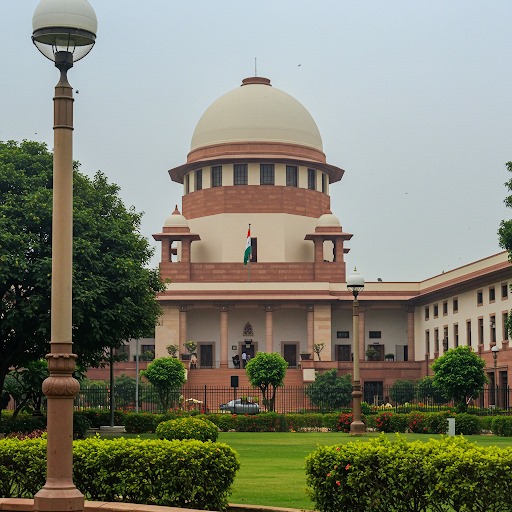



The Supreme Court today dismissed a petition requesting the rationalization of airfare structure for the 2025 Hajj in Kerala, stating that it would not be appropriate for the Court to offer an opinion on the matter. The Court explained that determining airfare is linked to the viability of airlines and involves a commercial policy decision. Interfering in such matters could lead to significant harm to travellers if airlines decide not to operate at the agreed rates.
"The petitioners [question] the airfare pricing for Hajj pilgrims departing from Calicut embarkation point. Their precise grievance is that while the airfare of Rs.86000 and Rs.85000 respectively is being charged from the pilgrims who are travelling from Kochi-Jeddah and Kannur-Jeddah respectively, an exorbitant airfare of Rs.1,25,000 (approx.) is being charged from those travelling from Calicut-Jeddah. It is pointed out that in terms of distance, Kochi-Jeddah is 4,170 kms whereas Calicut-Jeddah is 4086 kms. It is for these reasons that the petitioners allege arbitrariness and violation of Article 14 of the Constitution in the matter of airfare pricing. There is no dispute that the airfare has been fixed through the intervention of the Ministry of Minority Affairs, Government of India...the fixation of airfare is relatable to viability of airlines...it being part of a commercial policy decision, it will not be prudent for this Court to express any opinion or substitute such policy decision. In fact, any intervention by this Court will be counter-productive for the Hajj pilgrims, as in the event of recusal by any airline to fly on the agreed rates, it is likely to cause irreversible hardship to them", noted a bench of Justices Surya Kant and N Kotiswar Singh.
As the petitioners had submitted a detailed representation to the Government of India but received no response, the Court urged Additional Solicitor General KM Nataraj (representing the respondents) to direct the competent authority to review the representation.
"If it is found that the fare therein cannot be acceded to, let an order with brief reasons be uploaded on the website of the Ministry to enable the prospective visitors to know the reasons as to why airfare on Calicut-Jeddah route is higher as compared to other routes in the state of Kerala. We will appreciate if an appropriate order to this effect is passed within one week", the Court further ordered.
The petitioners, Hajj pilgrims, sought the Court’s intervention, alleging excessive airfare for travel from Calicut to Jeddah compared to other Kerala locations. They requested directives to rationalize and standardize Hajj 2025 airfare across all embarkation points in Kerala, allow them to change their embarkation point from Calicut to another airport within a set timeframe, and refund or reimburse the excess airfare charged to affected pilgrims.
Representing the petitioners, Senior Advocate Shadan Farasat argued that approximately 5,500 other pilgrims faced the same issue. They are required to depart from Calicut for their pilgrimage to Jeddah, where the airfare is Rs.1,25,000, while the fares from Kochi and Kannur are significantly lower at Rs.87,000 and Rs.85,000, respectively.
Hearing the submissions, Justice Kant remarked, "Probably it happens only because of the kind of expenditure an airline incurs on a particular airport..."
Senior Advocate Shadan Farasat argued that the ₹40,000 airfare difference across Kerala's embarkation points was arbitrary and unfairly impacted poor Hajj pilgrims. He pointed out that the Ministry of Minority Affairs issues a tender for the pilgrimage, but only one airline, Air India, secures it, creating a monopoly. When Justice Kant questioned the feasibility of airlines operating under lower fares, Farasat contended that the government controlled pricing, a view the judge disagreed with. Justice Kant suggested approaching the Kerala High Court, but Farasat noted that a prior High Court ruling on a similar issue was unfavorable, necessitating Supreme Court intervention due to time sensitivity. As the bench was reluctant to interfere in a policy decision, Farasat requested a time-bound response to a representation made by 2,500 pilgrims on January 30, 2025. In response, Justice Kant directed ASG Nataraj to ensure an explanation for the price differential is made publicly available online.
 info@adhwaitha.com
