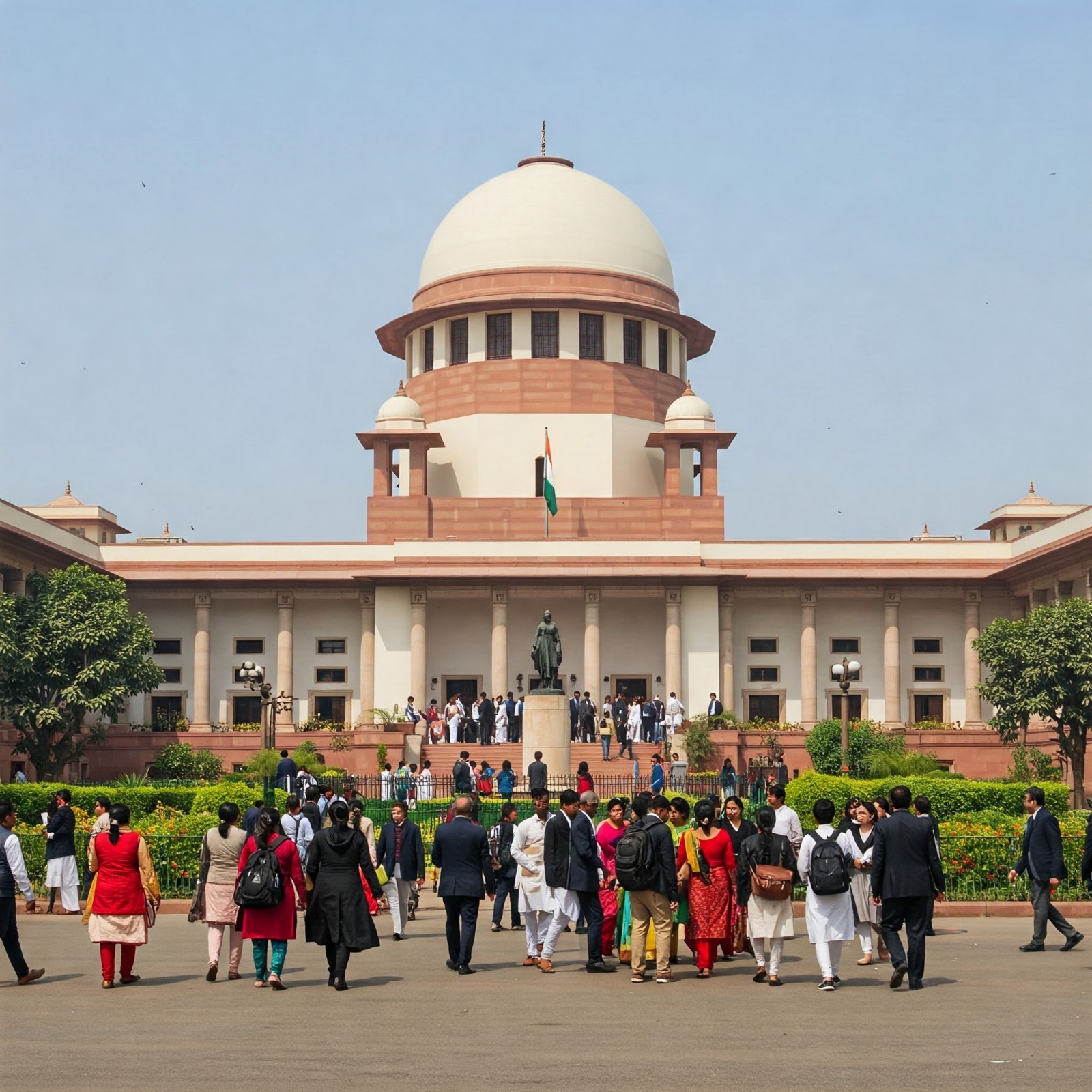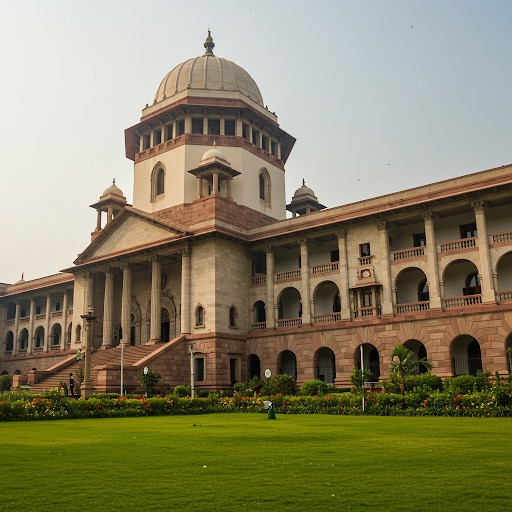
BENCH: SUPREME COURT OF INDIA
BACKGROUND:
The case of Maneka Gandhi v. Union of India (1978 AIR 597; 1978 SCR (2) 621) arose against the backdrop of growing concerns over the arbitrary use of executive power during the post-Emergency period in India. The case was triggered when the petitioner, Maneka Gandhi, a journalist and the daughter-in-law of former Prime Minister Indira Gandhi, was issued a notice by the Regional Passport Officer under Section 10(3)(c) of the Passport Act, 1967. The notice stated that her passport was being impounded "in the interest of the general public" without providing any specific reasons. When Maneka Gandhi requested the grounds for the action, the government refused to disclose them, citing public interest. In response, she filed a writ petition before the Supreme Court, challenging the constitutionality of the impounding order. She argued that the government's action was arbitrary, violated her Fundamental Rights under Articles 14, 19, and 21, and was a breach of the principles of natural justice. The case soon evolved into a significant constitutional challenge, raising broader questions about the interpretation of the right to life and personal liberty, the scope of due process, and the limits of executive discretion. The case became a landmark moment in Indian jurisprudence, as it led to the expansion of the interpretation of Article 21, incorporating the principles of natural justice and procedural fairness, thereby strengthening the protection of individual liberties against arbitrary state action.
FACTS:
The case of Maneka Gandhi v. Union of India (1978) arose when the Regional Passport Officer, New Delhi, issued a notice on July 2, 1977, under Section 10(3)(c) of the Passport Act, 1967, impounding Maneka Gandhi's passport "in the interest of the general public." The notice did not specify any reasons for the impounding. When Maneka Gandhi requested the government to disclose the grounds for the action, the authorities refused, claiming that it was not in the public interest to reveal the reasons. The government’s failure to provide an explanation or offer her a hearing before impounding her passport led Maneka Gandhi to file a writ petition under Article 32 of the Constitution before the Supreme Court, alleging violations of her Fundamental Rights.
Maneka Gandhi contended that the government's action infringed upon her rights under Articles 14, 19, and 21 of the Constitution. She argued that the impounding of her passport without being given an opportunity to be heard violated the principles of natural justice and procedural fairness. She claimed that her right to travel abroad, which was an essential part of personal liberty under Article 21, had been arbitrarily restricted. Additionally, she argued that the government’s refusal to disclose the reasons for the action was arbitrary and discriminatory, violating Article 14, which guarantees equality before the law. She further contended that the restriction on her freedom to travel amounted to an unreasonable restriction on her freedom of speech and expression, as guaranteed by Article 19(1)(a), and her freedom of movement under Article 19(1)(d).
The government, in its defense, argued that the right to travel abroad was not a Fundamental Right under the Constitution. It contended that the Passport Act granted the executive broad discretion to impound passports in the public interest and that the impounding of Maneka Gandhi's passport was done in accordance with the law. The government maintained that it was not obligated to provide reasons for its action, especially when it was taken in the general public interest. The case initially came before the Supreme Court as a constitutional challenge under Article 32, questioning the validity of the government's action and the Passport Act itself. The petitioner’s counsel argued that the Passport Act, particularly Section 10(3)(c), was violative of Articles 14, 19, and 21, as it allowed for the arbitrary exercise of executive power without adequate safeguards. The case evolved into a significant constitutional matter, addressing the broader issues of personal liberty, procedural fairness, and the scope of Fundamental Rights.
ISSUES:
Whether the nature of fundamental rights is absolute or are they conditional in nature and what is the limit to the scope of such Rights granted to Indian citizens by the Constitution?
Whether the alleged right, that is, Right to Travel Abroad covered within the interpretations of Article 21 protections?
Is there any relationship or nexus between the Articles 14, 19, and 21 of the Indian Constitution?
Determination of meaning and scope of the word “Procedure established by Law”.
Is the alleged section of the Passport Act of 1967, that is, Section 10(3)(c) is violating the fundamental rights, and if the answer is in affirmative then whether such legislative enactment is enforceable or not?
Whether the alleged impugned order given by the Regional Passport Officer against the natural justice principles?
LEGAL PROVISIONS:
Article 14 – Right to Equality
Article 19(1)(a) – Right to Freedom of Speech and Expression
Article 19(1)(d) – Right to Freedom of Movement
Article 21 – Right to Life and Personal Liberty
Article 32 – Right to Constitutional Remedies
Passport Act, 1967 – Section 10(3)(c) (Impounding of passports in the interest of general public)
Principles of Natural Justice – Audi alteram partem (right to be heard)
Basic Structure Doctrine – Though not explicitly cited, it was indirectly invoked in the context of interpreting Fundamental Rights expansively.
CASES CITED:
A.K. Gopalan v. State of Madras, AIR 1950 SC 27
R.C. Cooper v. Union of India, AIR 1970 SC 564
Satwant Singh Sawhney v. D. Ramarathnam, AIR 1967 SC 1836
Bennett Coleman & Co. v. Union of India, AIR 1973 SC 106
E.P. Royappa v. State of Tamil Nadu, AIR 1974 SC 555
Union of India v. Tulsiram Patel, AIR 1985 SC 1416
Olga Tellis v. Bombay Municipal Corporation, AIR 1986 SC 180
Francis Coralie Mullin v. The Administrator, Union Territory of Delhi, AIR 1981 SC 746
M.P. Sharma v. Satish Chandra, AIR 1954 SC 300
State of West Bengal v. Anwar Ali Sarkar, AIR 1952 SC 75
Narendra Kumar v. Union of India, AIR 1960 SC 430
ADM Jabalpur v. Shivkant Shukla, AIR 1976 SC 1207
State of Punjab v. Ajaib Singh, AIR 1953 SC 10
Hussainara Khatoon v. Home Secretary, State of Bihar, AIR 1979 SC 1369
Kesavananda Bharati v. State of Kerala, AIR 1973 SC 1461
Charles Sobraj v. The Superintendent, Central Jail, Tihar, New Delhi, AIR 1978 SC 1514
Smt. Indira Nehru Gandhi v. Raj Narain, AIR 1975 SC 2299
Nand Lal Bajaj v. State of Punjab, AIR 1981 SC 2041
State of Maharashtra v. Prabhakar Pandurang Sanzgir, AIR 1966 SC 424
D.K. Basu v. State of West Bengal, AIR 1997 SC 610
JUDGEMENT WITH REASONING:
The Supreme Court of India, in its landmark judgement in Maneka Gandhi v. Union of India (1978), held that the impounding of Maneka Gandhi's passport by the government without providing her a valid reason or affording her a fair hearing was unconstitutional. The Court ruled that the right to travel abroad is part of the fundamental right to personal liberty guaranteed under Article 21 of the Constitution. It further held that any law or executive action affecting personal liberty must be fair, just, and reasonable. The Court also declared that the principles of natural justice must be read into Articles 14, 19, and 21, thereby significantly expanding the scope of fundamental rights and interpreting the right to life and liberty in a broader and more substantive manner.
The Court's reasoning in this case was based on an expansive interpretation of the fundamental rights guaranteed under Part III of the Constitution. It rejected the narrow interpretation adopted in A.K. Gopalan v. State of Madras (1950), where the Court had held that the fundamental rights were distinct and independent of one another. Instead, in Maneka Gandhi, the Court ruled that Articles 14, 19, and 21 are interconnected and mutually reinforcing. It held that any law or state action restricting personal liberty must satisfy the tests of reasonableness and fairness under Article 14 (equality before the law) and Article 19 (protection of certain rights regarding freedom of speech, movement, and trade), along with the procedural safeguards guaranteed by Article 21. The Court further emphasized that the term "procedure established by law" in Article 21 does not merely refer to any statutory law but must be just, fair, and reasonable. It reasoned that the right to life and liberty under Article 21 is not merely limited to physical existence but also includes the right to live with dignity, freedom, and access to a fair legal process.
Additionally, the Court highlighted the principles of natural justice, holding that the government’s arbitrary action of impounding the passport without giving Maneka Gandhi a chance to be heard was a violation of her fundamental rights. It reasoned that the right to be heard (audi alteram partem) is an essential aspect of fair procedure and that the government’s failure to provide her with reasons for the impounding order was unjust and arbitrary. The Court also introduced the concept of substantive due process, holding that procedures restricting personal liberty must be reasonable, fair, and just, thereby laying the foundation for expanding the protection of civil liberties in subsequent cases. This judgement became a cornerstone of Indian constitutional law, establishing that no person can be deprived of their liberty arbitrarily and that the state’s actions must comply with the principles of natural justice, equality, and fairness.
CRITICISMS:
The judgement in Maneka Gandhi v. Union of India (1978), while widely celebrated for expanding the scope of fundamental rights and promoting the principles of fairness and reasonableness, has also faced criticism. One of the primary criticisms is that the Court, in its attempt to broaden the interpretation of Article 21, introduced the concept of substantive due process without clearly defining its scope or limits. Critics argue that this opened the door for excessive judicial discretion, allowing courts to strike down laws based on their subjective notions of fairness and justice, thereby weakening the doctrine of parliamentary supremacy. The vague and undefined nature of substantive due process created uncertainty regarding the criteria for determining the validity of laws, giving the judiciary broad and potentially inconsistent powers of review.
Another criticism is that the judgement blurred the distinction between Articles 14, 19, and 21 by holding them to be interconnected and mutually reinforcing. While this approach strengthened individual rights, it also led to concerns about judicial overreach, as it allowed the courts to subject any law or executive action affecting personal liberty to scrutiny under all three articles. This interconnected interpretation, although progressive, was seen by some legal scholars as a deviation from the constitutional framework, which treats each fundamental right as distinct and separately enforceable.
Furthermore, some critics argue that the judgement placed an unrealistic burden on the state by requiring all procedures affecting personal liberty to be fair, just, and reasonable. While this significantly strengthened civil liberties, it also made it difficult for the government to implement certain regulations and policies efficiently, as they were now subject to extensive judicial review. The expanded interpretation of Article 21 created ambiguity regarding the limits of the right to life and liberty, leading to inconsistent application in subsequent cases.
Finally, the judgement was criticized for creating potential conflicts between the judiciary and the executive. By asserting the power to review executive actions and requiring them to meet standards of fairness and reasonableness, the Court was seen as encroaching upon the domain of the executive and legislative branches. This raised concerns about the separation of powers, with some viewing the judgement as an instance of judicial activism that undermined the authority of the elected branches of government. Despite these criticisms, the Maneka Gandhi judgement remains a cornerstone of Indian constitutional jurisprudence, although its broad and somewhat ambiguous principles continue to generate debate regarding the balance between judicial activism and legislative authority.
ANALYSIS:
The decision in Maneka Gandhi v. Union of India (1978) is a landmark judgement that significantly expanded the interpretation of fundamental rights in the Indian Constitution. The Supreme Court’s ruling marked a departure from the earlier restrictive view of personal liberty and laid the foundation for a more expansive and substantive interpretation of Articles 14, 19, and 21. The Court held that these articles are not isolated but interconnected, meaning that any law or state action infringing on personal liberty must satisfy the requirements of fairness, justness, and reasonableness under all three articles. This broadened the scope of judicial review, allowing the courts to scrutinize not only the existence of legal procedures but also their fairness and substantive nature. By incorporating the principles of natural justice into the interpretation of Article 21, the Court strengthened procedural safeguards and ensured that executive actions affecting fundamental rights would be subject to rigorous scrutiny.
The Court’s introduction of substantive due process was another significant aspect of the decision. It held that the phrase "procedure established by law" in Article 21 does not merely refer to any statutory procedure but requires the procedure to be fair, just, and reasonable. This transformed Article 21 into a robust safeguard against arbitrary state action, offering greater protection to civil liberties. The judgement also emphasized the importance of procedural fairness, holding that the government's refusal to provide Maneka Gandhi with reasons for impounding her passport or an opportunity to be heard was a violation of the principles of natural justice. The ruling established that the right to be heard (audi alteram partem) is an essential element of due process, reinforcing the protection against arbitrary executive action.
Moreover, the judgement had a profound impact on Indian constitutional law by expanding the substantive content of the right to life and personal liberty. The Court interpreted Article 21 to include not only the right to physical existence but also the right to live with dignity, freedom, and access to fair legal procedures. This broad interpretation laid the foundation for subsequent human rights jurisprudence in India, influencing cases related to privacy, environmental protection, and prisoners' rights. The decision also reinforced the judiciary’s role as the guardian of fundamental rights, empowering it to review and strike down arbitrary executive and legislative actions.
Overall, the Maneka Gandhi decision is regarded as a milestone in the evolution of Indian constitutional law. It established the supremacy of individual liberties over arbitrary state action and strengthened the protection of personal freedom through the incorporation of natural justice principles. However, while the judgement is celebrated for enhancing civil liberties, it also raised concerns about judicial overreach and the potential for inconsistent application of the broad principles it introduced. Nonetheless, the ruling remains a cornerstone of Indian jurisprudence, shaping the constitutional landscape and safeguarding fundamental rights against arbitrary state encroachments.
 info@adhwaitha.com