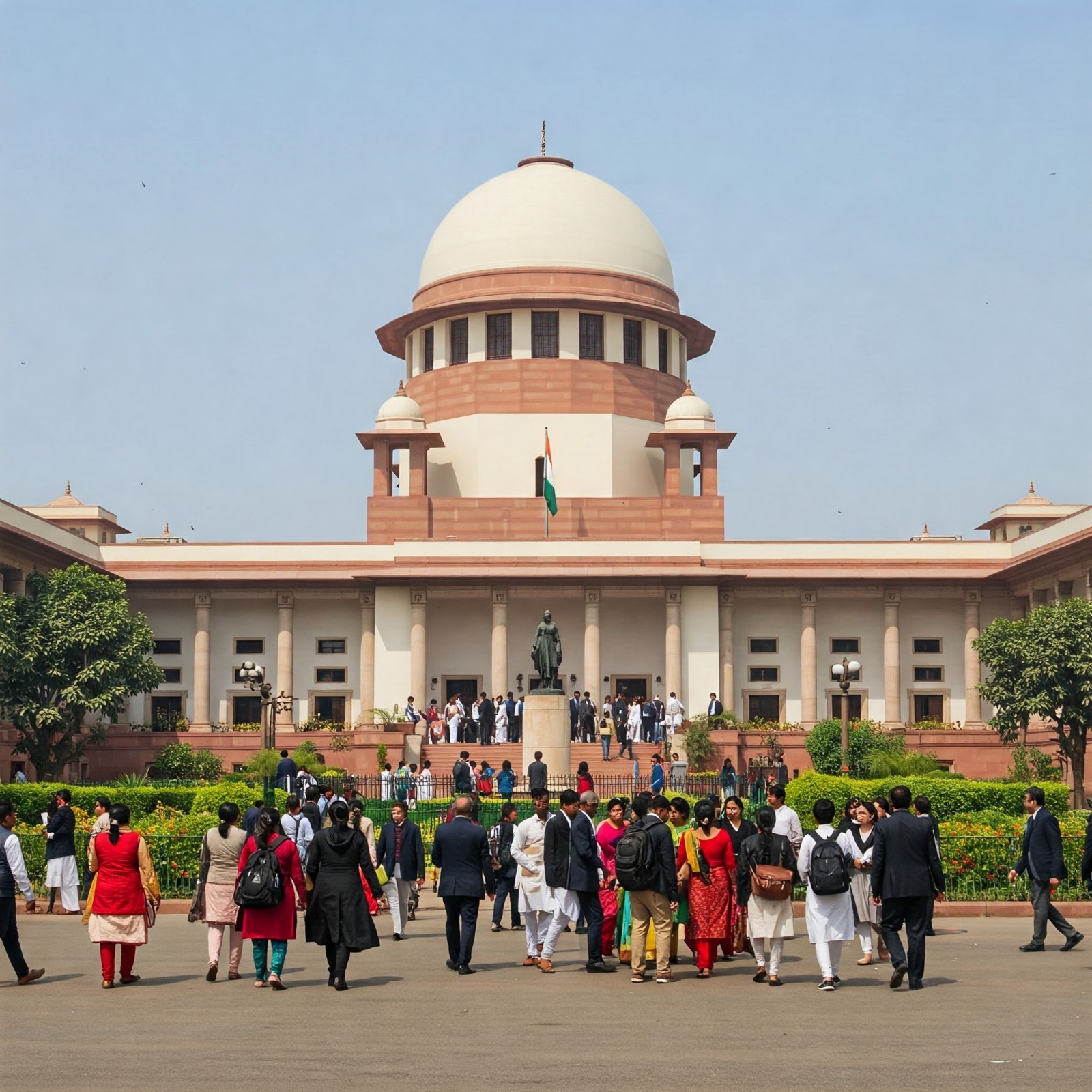
NAVTEJ SINGH JOHAR & ORS. V. UNION OF INDIA THR. SECRETARY MINISTRY OF LAW AND JUSTICE (2018) 10 SCC 1





DATE: 06/09/2018
COURT: Supreme Court of India
BENCH: Chief Justice Dipak Misra, Justice Rohington Nariman, Justice D Y Chandrachud, Justice A M Khanvilkar, & Justice Indu Malhotra
OVERVIEW:
The case of Navtej Singh Johar v. Union of India (2018) is a landmark judgment by the Supreme Court of India that decriminalized consensual homosexual relations between adults, thereby affirming the constitutional rights of LGBTQ+ individuals. The case challenged the constitutionality of Section 377 of the Indian Penal Code, 1860, which criminalized "carnal intercourse against the order of nature," a provision historically used to target homosexual individuals. The petitioners, including dancer Navtej Singh Johar and others, argued that Section 377 violated their fundamental rights under Articles 14 (equality), 15 (non-discrimination), 19 (freedom of expression), and 21 (right to life and personal liberty) of the Indian Constitution. The Court, in a unanimous verdict by a five-judge Constitution Bench led by then Chief Justice Dipak Misra, held that criminalizing consensual sexual acts between adults was unconstitutional. The judgment declared that sexual orientation is an intrinsic part of identity and any discrimination based on it is unconstitutional. The Court also emphasized the principles of dignity, privacy, and equality, highlighting that the right to love and express oneself freely is protected under the Constitution. The ruling was a historic step toward LGBTQ+ rights in India, marking the end of a colonial-era law that had long marginalized the community.
FACTS:
The case of Navtej Singh Johar v. Union of India (2018) was the culmination of a long and arduous struggle against the criminalization of homosexuality in India, driven by years of legal battles, social activism, and political debates. The dispute centered around Section 377 of the Indian Penal Code (IPC), a colonial-era law introduced in 1860, which criminalized "carnal intercourse against the order of nature." For decades, this provision was used to target and harass LGBTQ+ individuals, resulting in discrimination, violence, and the denial of fundamental rights. The fight against Section 377 formally began in 2001 when the Naz Foundation, a Delhi-based NGO advocating for sexual health and LGBTQ+ rights, filed a public interest litigation (PIL) before the Delhi High Court. The petition challenged the constitutionality of Section 377, arguing that it violated the rights to equality, privacy, and dignity under the Constitution. However, the Delhi High Court initially dismissed the plea in 2004 on the grounds that the NGO lacked locus standi. The Supreme Court later restored the case and directed the High Court to hear it on merits.
In a groundbreaking 2009 judgment (Naz Foundation v. Government of NCT of Delhi), the Delhi High Court ruled that Section 377, insofar as it criminalized consensual sexual acts between adults, was unconstitutional. The court held that the provision violated Articles 14, 15, and 21 of the Constitution, thereby recognizing the right to sexual autonomy and privacy. However, the victory was short-lived. In Suresh Kumar Koushal v. Naz Foundation (2013), the Supreme Court overturned the High Court’s decision, reinstating Section 377. The Court reasoned that only Parliament, not the judiciary, could amend or repeal the law and dismissed the LGBTQ+ community as a "minuscule minority," unworthy of specific constitutional protection. This ruling led to widespread protests, disillusionment, and renewed activism across the country. LGBTQ+ groups, civil society organizations, and human rights advocates mobilized against the regressive judgment, calling for legal reform and equal rights.
Following the Koushal judgment, the political and social climate in India witnessed growing support for LGBTQ+ rights. The landmark Justice K.S. Puttaswamy v. Union of India (2017) judgment, which upheld the right to privacy as a fundamental right under Article 21, significantly strengthened the fight against Section 377. The Supreme Court, in Puttaswamy, observed that sexual orientation was an essential attribute of privacy, providing a powerful legal precedent for the LGBTQ+ movement. Subsequently, in 2016, a fresh batch of petitions was filed, led by dancer Navtej Singh Johar, journalist Sunil Mehra, chef Ritu Dalmia, and businesswoman Aman Nath, along with other activists. The petitioners argued that Section 377 violated their rights to privacy, equality, and dignity, and subjected them to social ostracism, harassment, and psychological trauma. They contended that the law deprived them of their personal liberty and freedom of expression by criminalizing their consensual relationships.
The legal battle also drew attention to the broader systemic struggles faced by LGBTQ+ individuals in India, including police harassment, workplace discrimination, and lack of legal protection against violence. The case became a rallying point for the LGBTQ+ movement, receiving support from prominent figures, civil society groups, and even corporate entities advocating for inclusivity. The Supreme Court admitted the petitions in 2018 and referred the matter to a five-judge Constitution Bench.
ISSUES:
Whether Section 377 of the Indian Penal Code (IPC) violated the fundamental rights guaranteed under the Indian Constitution.
Whether the criminalization of consensual same-sex relationships infringed upon the right to privacy and autonomy under Article 21.
Whether Section 377 was discriminatory against LGBTQ+ individuals and violated the right to equality under Article 14.
Whether Section 377 curtailed the freedom of expression guaranteed under Article 19(1)(a).
Whether the law deprived LGBTQ+ individuals of their dignity and personal identity.
Whether Section 377 had adverse public health implications by discouraging LGBTQ+ individuals from seeking healthcare services.
Whether the Supreme Court could overrule its previous ruling in Suresh Kumar Koushal v. Naz Foundation (2013) based on the doctrine of progressive realization of rights.
LEGAL PROVISIONS:
Section 377 of the Indian Penal Code, 1860
Article 14 of the Indian Constitution
Article 15 of the Indian Constitution
Article 19(1)(a) of the Indian Constitution
Article 21 of the Indian Constitution
CASES CITED:
Naz Foundation v. Government of NCT of Delhi (2009)
Suresh Kumar Koushal v. Naz Foundation (2013)
Justice K.S. Puttaswamy v. Union of India (2017)
National Legal Services Authority (NALSA) v. Union of India (2014)
Francis Coralie Mullin v. Administrator, Union Territory of Delhi (1981)
Shafin Jahan v. Asokan K.M. (2018)
State of Madras v. V.G. Row (1952)
Maneka Gandhi v. Union of India (1978)
Govind v. State of Madhya Pradesh (1975)
Anuj Garg v. Hotel Association of India (2008)
State of Maharashtra v. Indian Hotel and Restaurants Association (2013)
Indian Express Newspapers v. Union of India (1985)
Chintaman Rao v. State of Madhya Pradesh (1950)
Kharak Singh v. State of Uttar Pradesh (1963)
Common Cause v. Union of India (2018)
Puttaswamy v. Union of India (2018)
Bijoe Emmanuel v. State of Kerala (1986)
Vishaka v. State of Rajasthan (1997)
Lata Singh v. State of Uttar Pradesh (2006)
Shreya Singhal v. Union of India (2015)
JUDGEMENT WITH REASONING:
The Supreme Court of India unanimously struck down Section 377 of the Indian Penal Code (IPC) to the extent that it criminalized consensual sexual acts between adults. The Court declared that Section 377 was unconstitutional as it violated the fundamental rights to equality, dignity, privacy, and personal liberty under Articles 14, 15, 19, and 21 of the Indian Constitution. The judgment effectively decriminalized homosexuality in India, affirming the rights of LGBTQ+ individuals. However, the provision was retained for non-consensual sexual acts and offenses involving minors or animals.
The Supreme Court, based its decision on the principles of equality, dignity, privacy, and constitutional morality. The Court held that Section 377 of the Indian Penal Code (IPC) violated Article 14 by creating an unreasonable classification. It criminalized consensual sexual relations between adults based on their sexual orientation, thereby unfairly targeting the LGBTQ+ community. The Bench applied the manifest arbitrariness test, holding that the provision lacked a reasonable basis and was irrational and discriminatory. It emphasized that the law failed the test of constitutional validity, as it treated an entire group of individuals as criminals based solely on their consensual sexual preferences.
The Court further ruled that Section 377 contravened Article 15, which prohibits discrimination on grounds of sex. It interpreted the term "sex" to include sexual orientation, thereby holding that discrimination based on an individual's orientation amounted to sex-based discrimination. The judgment recognized that sexual orientation is an immutable characteristic and part of an individual’s identity, making discrimination against LGBTQ+ individuals constitutionally impermissible. A significant factor in the Court’s reasoning was the right to privacy and autonomy guaranteed under Article 21. Relying on the landmark judgment in Justice K.S. Puttaswamy v. Union of India (2017), which recognized privacy as a fundamental right, the Court held that intimate relationships and sexual preferences form an essential part of individual autonomy and dignity. It observed that the criminalization of consensual sexual acts between adults violated the right to live with dignity and make personal choices free from state interference.
The Court also held that Section 377 infringed on freedom of expression under Article 19(1)(a). It ruled that the provision restricted LGBTQ+ individuals from expressing their identity, affection, and relationships freely, creating a chilling effect on their freedom of expression. The Court emphasized that sexual expression is a fundamental part of one’s personality and that criminalizing consensual same-sex relationships amounted to an unconstitutional restriction on this right. The Bench invoked the doctrine of constitutional morality, asserting that the rights of minorities, including LGBTQ+ individuals, must be protected from the prejudices of the majority. It held that popular morality or societal disapproval could not justify the infringement of fundamental rights. The Court stressed that constitutional morality, which upholds dignity, equality, and individual freedoms, must prevail over social morality or majoritarian views.
Lastly, the Court acknowledged the public health and social justice concerns associated with Section 377. It noted that criminalization impeded access to healthcare services, particularly for HIV/AIDS prevention and treatment, as it deterred individuals from seeking medical help due to fear of prosecution. The ruling also highlighted the psychological trauma, stigma, and discrimination faced by LGBTQ+ individuals due to the criminalization of their identities. In conclusion, the Court’s reasoning was grounded in the principles of equality, dignity, privacy, and constitutional morality. It declared that Section 377, by criminalizing consensual sexual acts between adults, was arbitrary, discriminatory, and violative of fundamental rights, thereby making it unconstitutional.
CRITICISMS:
The Supreme Court's ruling in Navtej Singh Johar v. Union of India (2018) was widely praised for decriminalizing homosexuality but drew criticism for its limited scope. While the judgment struck down Section 377, it did not mandate affirmative policies or legal reforms to protect LGBTQ+ rights. This led to concerns that the ruling, though historic, might remain largely symbolic without substantial legislative changes. Critics argued that the Court missed an opportunity to expand Article 15 by explicitly including sexual orientation as a protected category, leaving interpretative gaps in anti-discrimination laws. Furthermore, the verdict did not address systemic issues of police harassment, violence, and social stigma, which persisted despite decriminalization.
Additionally, the judgment was criticized for its lack of explicit protections against social and religious backlash, offering no concrete safeguards against cultural hostility. Although the Court emphasized constitutional morality over social morality, it failed to outline measures to protect LGBTQ+ individuals from potential discrimination. Legal experts also faulted the Court for not directing Parliament to enact comprehensive anti-discrimination legislation, leaving LGBTQ+ individuals without clear legal remedies against prejudice. Thus, while the verdict was a significant step in recognizing LGBTQ+ rights, it fell short of ensuring broader legal and social equality.
ANALYSIS:
The Supreme Court's decision in Navtej Singh Johar v. Union of India (2018) marked a significant turning point in India’s legal and social landscape, particularly in advancing LGBTQ+ rights. The ruling demonstrated the Court’s progressive interpretation of fundamental rights, particularly emphasizing equality, privacy, dignity, and constitutional morality. By striking down Section 377, the Court affirmed that sexual orientation is an intrinsic part of individual identity, and criminalizing consensual same-sex relations was discriminatory and unconstitutional. The judgment highlighted the importance of constitutional morality over popular morality, asserting that individual rights could not be denied based on majoritarian prejudices. This principle reaffirmed the role of the judiciary in protecting marginalized groups from societal discrimination.
The decision also underscored the right to privacy and personal autonomy, building on the Justice K.S. Puttaswamy v. Union of India (2017) ruling, which recognized privacy as a fundamental right. The Court held that consensual sexual acts between adults were part of an individual’s private sphere, protected under Article 21. Additionally, by interpreting Article 15 to include discrimination based on sexual orientation, the judgment broadened the scope of anti-discrimination rights, setting a vital legal precedent. However, despite its progressive stance, the ruling had limitations. While it decriminalized homosexuality, it did not provide affirmative legal protections for LGBTQ+ individuals. The absence of explicit directives for enacting anti-discrimination legislation or safeguarding civil rights left the community vulnerable to ongoing social stigma and discrimination. Nonetheless, the verdict was a landmark step towards legal recognition and acceptance of LGBTQ+ rights, establishing a strong foundation for future legal and social reforms.
 info@adhwaitha.com